Mold Removal in Desert Mountain, Scottsdale, AZ
Desert Mountain is a gated golf community in far north Scottsdale, where the houses often sit inside the desert instead of on top of it, and a share of them rest between visits. Check where moisture starts in Desert Mountain homes, keep up the checkup routine for part-time occupancy, and know what to do first when something smells.
Get a call back
Fill in the form or call (480) 844-3647. Calls are answered day and night.
§ 01 / 10
About Desert Mountain
Desert Mountain is a gated community in far north Scottsdale, in the 85262 ZIP code, built around its golf courses across the foothills of the northern McDowells. The lots are large, the houses are spread out, and the community keeps the desert itself as the scenic frame: saguaros, granite outcrops, and quiet streets. A good number of homes here are residence number two, visited for a season and closed for the rest, which is exactly the pattern that shapes mold risk. When a house is quiet, its problems are quiet too, until someone opens the door months later and smells it. The checkup rhythm on this page is built for that moment, and for the owners who are here for a season and away for the rest.

§ 02 / 10
Why does a closed Desert Mountain home get mold?
Because there is no shortage of water inside a closed house. The AC still runs in summer, which means condensate is still being produced, and a line that clogs in July on an unoccupied property has months before anyone looks. Supply lines to the ice maker, the softener and the water heater hold pressure the whole time. Monsoon storms push rain against windward walls in June through September, and nobody walks the rooms afterward. The EPA's rule, dry wet materials within 24 to 48 hours, assumes someone is there to notice the wet; in a home that sits empty, the window is long gone by the time the first visit happens. That is why the routine below matters more here than anywhere.
§ 03 / 10
Where should the check start in a home that sits closed?
In a fixed order, every visit. First the water meter, with everything in the house off: a turning dial in an empty house is the quiet emergency. Second, the AC closets and drain pans, one by one, because condensate is the most common source in a closed property. Third, the water heater and softener closets, looking at the floor and the base of the units. Fourth, under the kitchen and every bathroom sink. Fifth, the rooms that carry a smell, and the ceilings wherever a roof valley passes over. Then, if anything reads odd, a moisture meter turns suspicion into a fact. Fifteen minutes, four corners of the house. The point is the same order every time; skipping around the list is how a wet corner stays a secret.

§ 04 / 10
What should the caretaker do if they find water?
Stop the source if it is reachable, and do not run the AC if the air handler or ducts may be wet, because running a contaminated system spreads spores through the house. Keep the door to the wet room closed to limit air movement, and photograph everything before anyone starts moving furniture. Leave any growth alone; do not scrub it. Then call (480) 844-3647 with the details: what room, what source, how long the house has been closed, and whether a caretaker or manager is on site. That call is the difference between a drying job and a remediation job, and it is worth making from wherever the owner happens to be. The caretaker keeps the photos and the timeline; the owner keeps the decisions.
Line open now
Mold in a Desert Mountain home?
Describe what you see or smell. You do not need to diagnose anything yourself.
§ 05 / 10
What is the seasonal routine for a part-time home?
Build two habits. On every arrival: the smell test first, then the meter, then the AC closets, so the house gets checked the same way every time and nothing gets skipped. Before every departure: shut off the washer valves, confirm the irrigation schedule matches the season, and make sure the AC service and the management contact both know the home will be quiet. Between visits: a monthly walkthrough by a caretaker with a moisture meter beats any smart sensor, and both beat finding out in October. The routine is boring on purpose. In a closed house, boring is the entire game. Write it down and leave it with the house file, so anyone who covers a visit follows the same steps in the same order.
§ 06 / 10
Do monsoon storms hit Desert Mountain differently?
Yes, in two ways. The storms that cross the northern foothills arrive with wind behind them, so rain gets pushed against window frames, vents and exterior doors that handle a calm rain fine. And the elevation and openness of these lots means less shelter from the desert around each house: wind exposure is higher, and roof edges take the load. After any significant storm, the storm-side rooms and the ceilings below roof valleys deserve a walk, ideally the same week. Marks that show up later usually started the day of the storm, not the day they appeared. Keep an eye on the wall bases as well; on these lots, wind carries rain farther sideways than people expect, especially at exterior corners. That is where the first dark spot usually shows.

§ 07 / 10
How does the work run in a home this size?
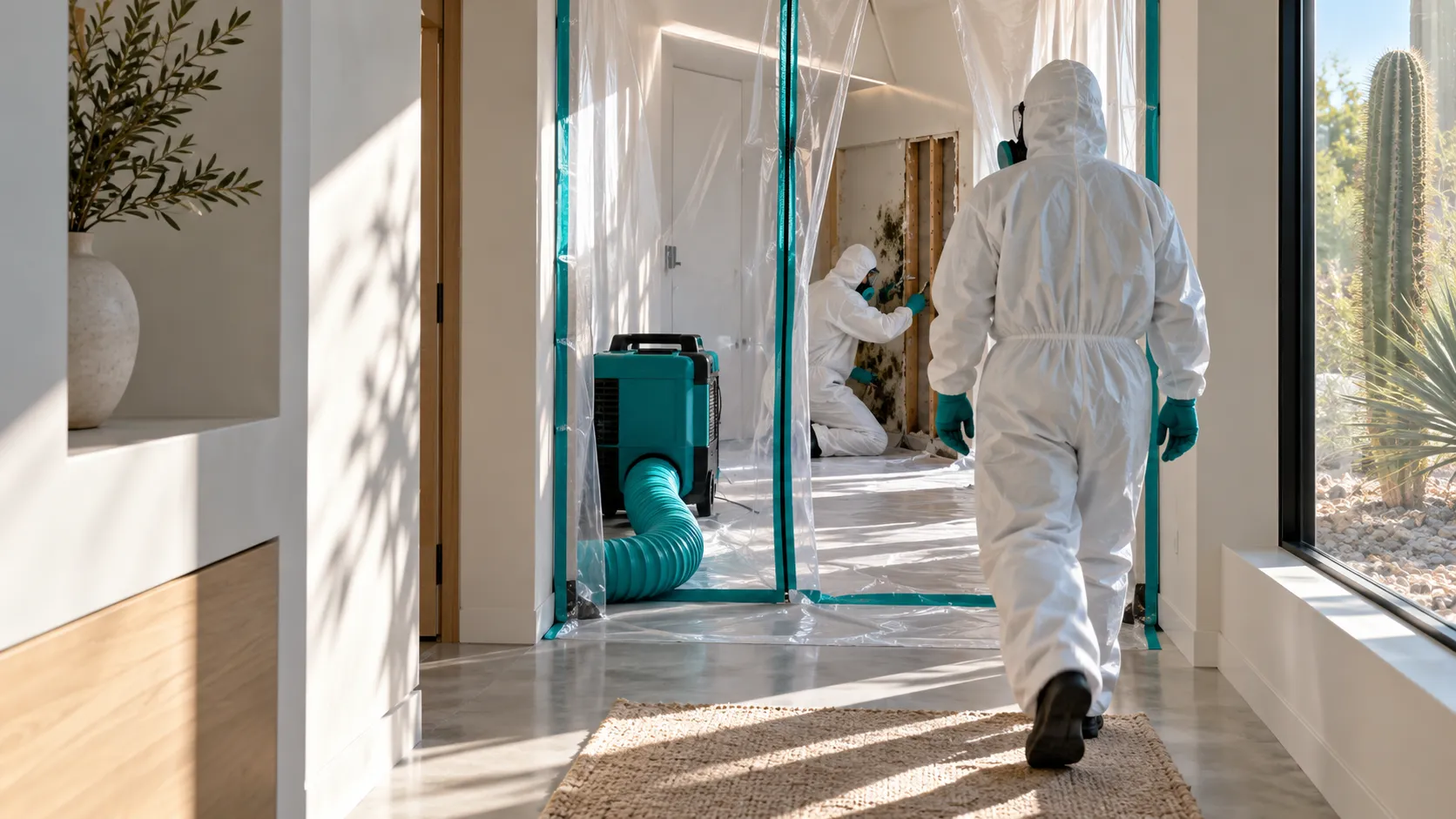
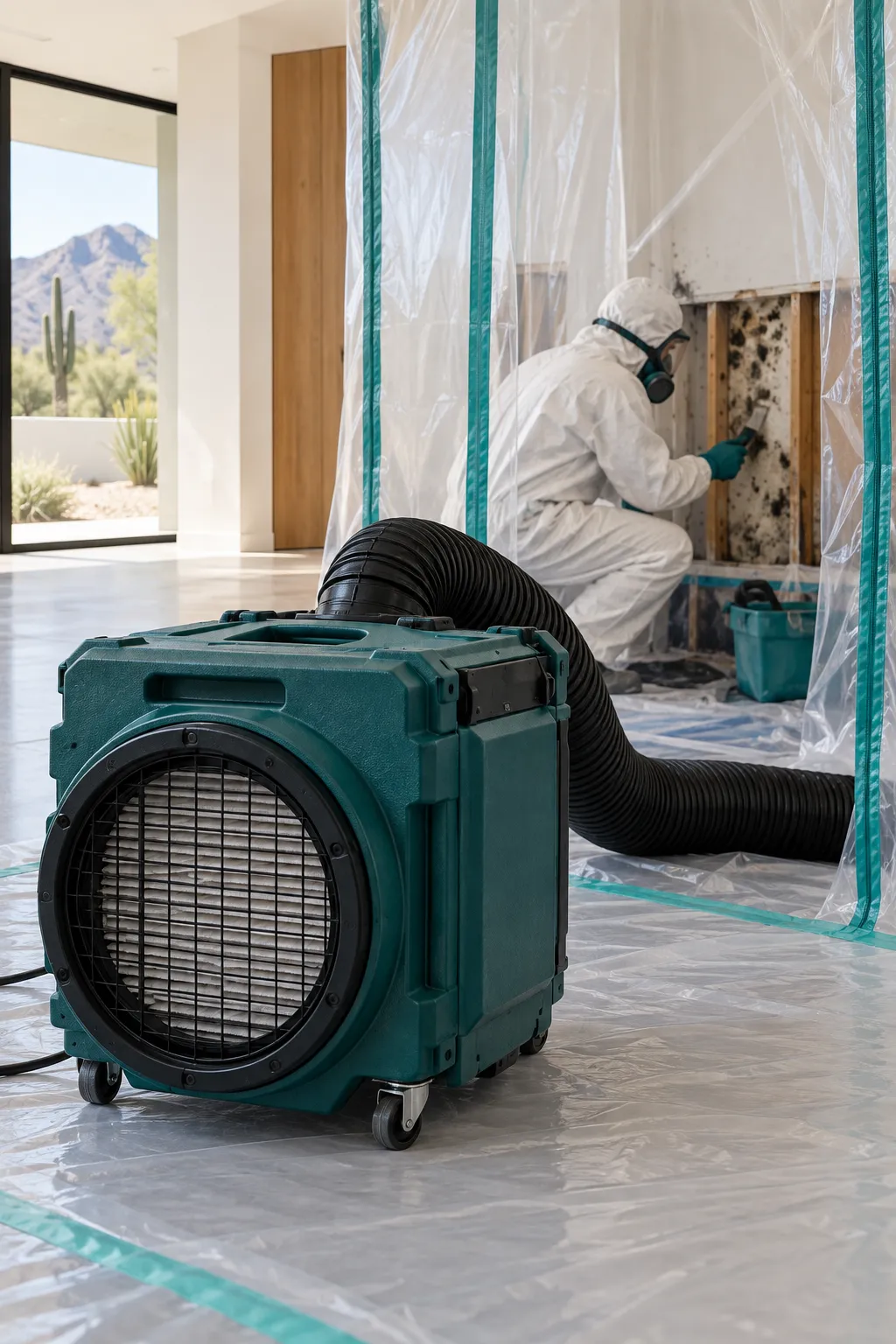
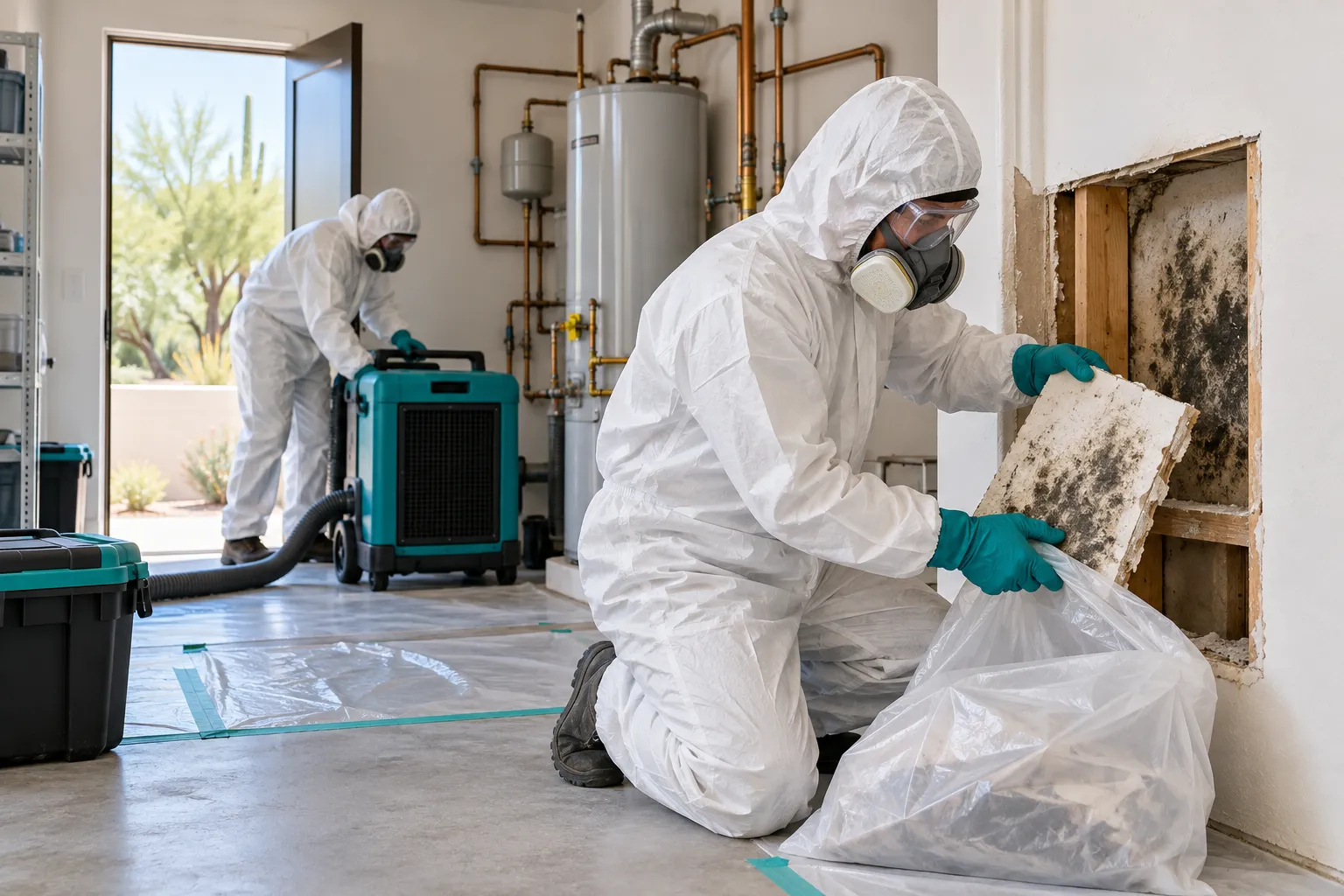
With a plan built around access and documentation. The visit starts with the moisture map, room by room, because in a spread-out house the wet area is not always where the smell is strongest. Containment keeps the work zone separate from the rest of the house, and floors and finishes on the routes in get protected. If a caretaker, manager or family member is coordinating from out of state, they get the same record the crew works from: photos, readings, daily notes. Materials that grew mold come out, surfaces get cleaned, and the drying runs until the readings meet the dry standard, verified before any repair. The pacing is deliberate: clean first, dry second, verify third, and only then let anyone talk about finishes.
§ 08 / 10
Our mold services for Desert Mountain homes
Inspection and testing starts the file, especially for a closed home with a smell and no obvious source. Remediation and removal follows when testing confirms growth. Attic mold removal covers the roof-leak side, and the water damage side handles active leaks before anything else. Desert Mountain is covered through the North Scottsdale area, which spans the 85262 and 85255 ZIP codes. One call covers all of it, whether the owner is standing in the house or a thousand miles away. If you are not sure who should meet the crew, say so; the visit works with a caretaker, a manager, or a video call, and the scheduling flexes around whichever one it is. Whichever contact takes the lead, the file stays in one place.
§ 09 / 103 questions
Questions people ask
01We only visit part of the year. Who should check the house?
A caretaker or property manager can run the 5 point walkthrough with a moisture meter, and a plumber can confirm supply lines while they are there. The important part is the schedule: monthly in summer, and always after a storm week, whatever the calendar says.
02Is a closed house with the AC on at risk of mold?
It can be, and the AC is part of why. Condensation is being produced all summer, and the system that manages it can clog without anyone noticing. The AC protects against heat; the monthly walkthrough with a meter protects against water. Both belong in the plan for a part-time home.
03Can the job be coordinated with a caretaker or designer from another state?
Yes. The job gets documented with photos and daily readings so anyone can follow it remotely, and naming a point of contact at the start keeps everyone on the same plan. It is a normal way to run work in a second home here.