Why Mold Grows in Scottsdale Homes and Where It Hides
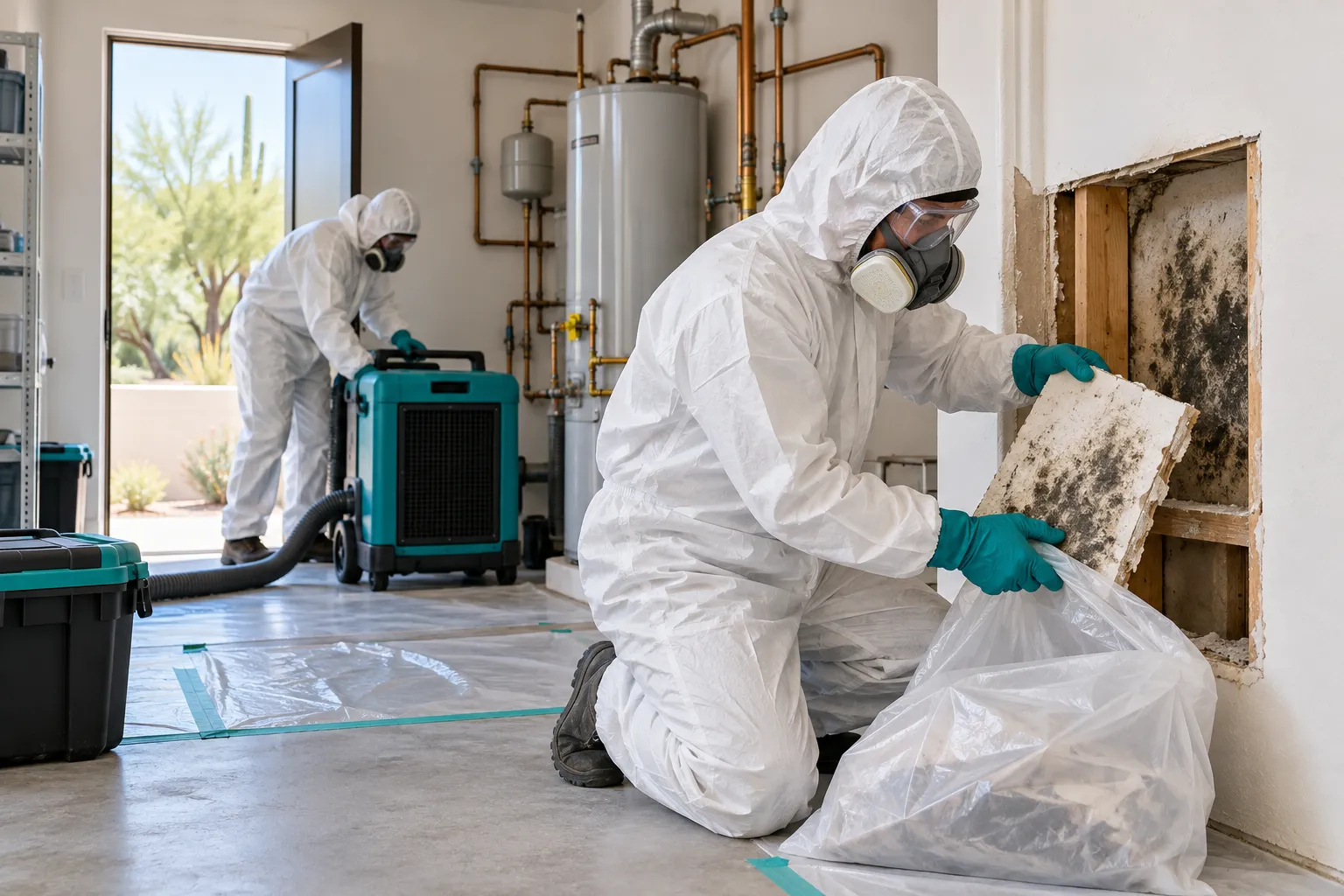
Mold growth in the desert sounds like a contradiction, but indoors it follows water, not the weather outside. A small spot stops being a cleaning job past about 10 square feet, or when the growth sits in the HVAC system, inside a wall cavity, or has already come back after cleaning. If you are already past that point, call (480) 844-3647.
Published
Get a call back
Fill in the form or call (480) 844-3647. Calls are answered day and night.
§ 01 / 07
Does mold really grow in the desert?
Yes, and the reason is water, not humidity. Mold spores are everywhere, indoors and outdoors, and the EPA (opens in a new tab) is blunt that they will not grow without moisture. Scottsdale itself is dry: MoldGuide's Scottsdale page lists about 33% average humidity, and National Weather Service normals put rainfall at about 9 inches a year, which is why outdoor walls and patios stay clean.
Indoor growth starts after a water event. A supply line drips inside a cabinet, an AC drain clogs, rain finds a gap in a roof. Once drywall, wood or insulation stays damp for a few days, the material holds its own damp microclimate, and dry desert air outside cannot reach it. Desert dryness buys you time to fix a leak. It does not prevent mold.
§ 02 / 07
How does water get into a Scottsdale home?
Indoor mold here often starts with 1 of 5 water events.
- AC condensate lines. An air handler pulls water out of the air, and a thin drain line carries it away. When that line clogs, the pan overflows into the closet, attic or ceiling below.
- Plumbing and slab leaks. The median Scottsdale home was built around 1991, and IBHS found homes near 30 years old were about 3 times as likely to have a supply or drainage problem.
- Monsoon roof leaks. Storm season runs June 15 to September 30 (opens in a new tab), per the National Weather Service. Wind-driven rain finds failed flashing, and leaks show in the attic.
- Water heaters. IBHS reports failure risk rises after year 5, and about 3 in 4 fail before year 12. Hard water north of Chaparral Road runs 13 to 17 grains per gallon.
- Irrigation and pool lines. Drip tubing and pool plumbing run underground and through walls, and a leak can wet soil and stucco for months.
§ 03 / 07
Where does mold hide inside the house?
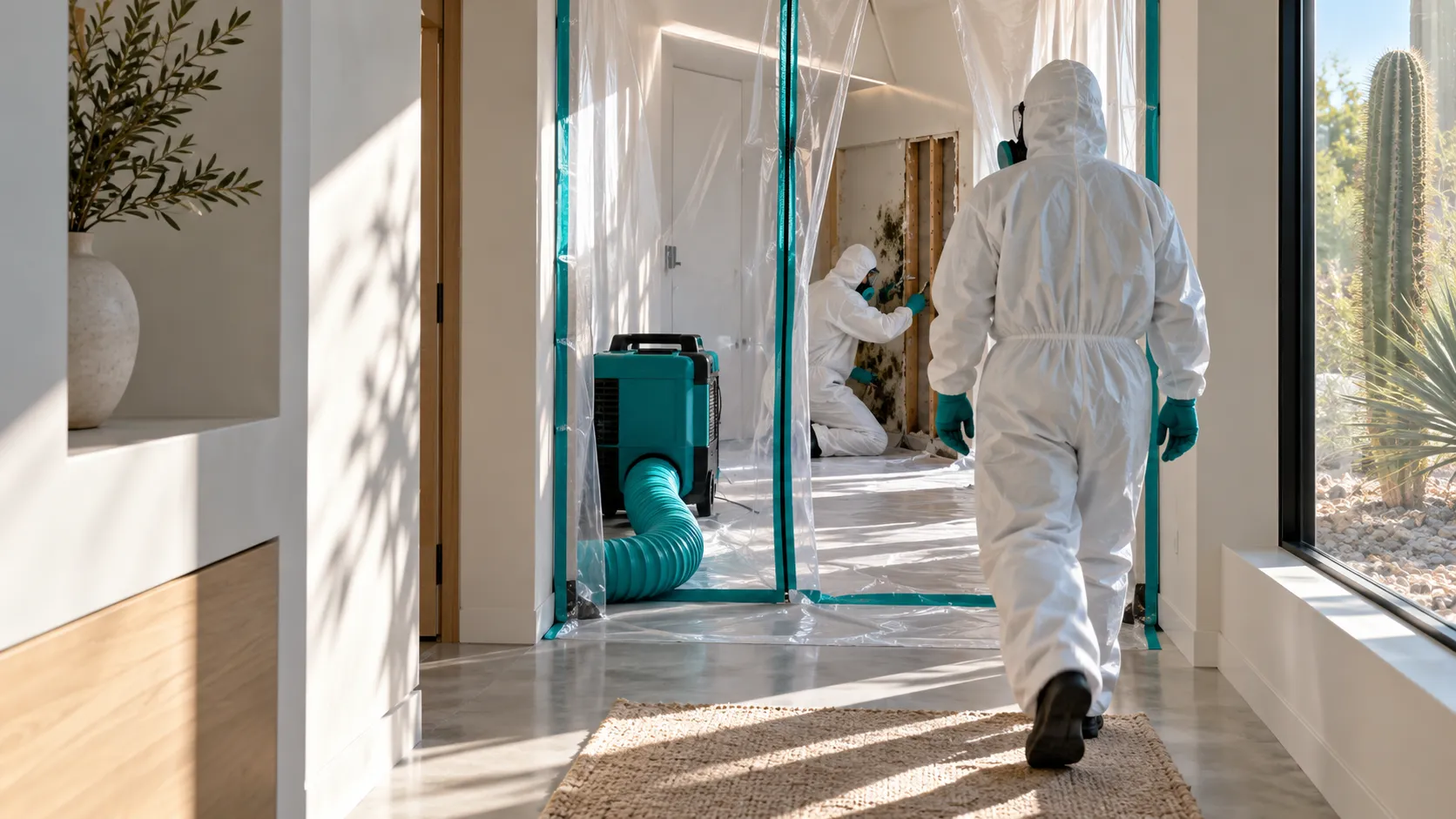
Mold shows up where water reaches and air does not. In Scottsdale homes that usually means 5 places:
- Air handler closets. A clogged condensate pan soaks the platform, the wall behind it and the framing below, all behind a closed door.
- Attic sheathing. Roof leaks stain the underside of the roof deck first. Insulation just below holds the moisture and hides the evidence.
- Behind baseboards. Water wicks up the bottom of the drywall. The floor dries and looks normal while the lower wall stays damp.
- Under sinks. A slow supply line or trap leak feeds the cabinet floor and the wall behind the plumbing, in the dark and closed up.
- Walk-in closets. Closets get little airflow and often share a wall with a bathroom or plumbing, so a leak next door can show up here first.
§ 04 / 07
Why does summer heat change the timeline?
Warm air holds more moisture, and a closed-up house has no way to dry. Phoenix averages 111 days a year at or above 100 degrees, and those are the days when a home runs its AC with every door and window shut. Evaporation is what actually dries a damp wall, and a sealed room with no airflow dries slowly or not at all.
That is what makes the timeline short. The EPA says water-damaged areas and items should be dried within 24 to 48 hours to prevent mold growth. A home that sits closed for the summer, or for a season with nobody living in it, can hold a slow leak for weeks before anyone notices. By the time a smell shows up, the materials behind the wall may have been wet the whole time.
Line open now
Mold growing right now?
Describe what you see or smell. You do not need to diagnose anything yourself.
§ 05 / 07
When does a small problem become a call?
Three situations push a mold problem past what a homeowner should handle alone:
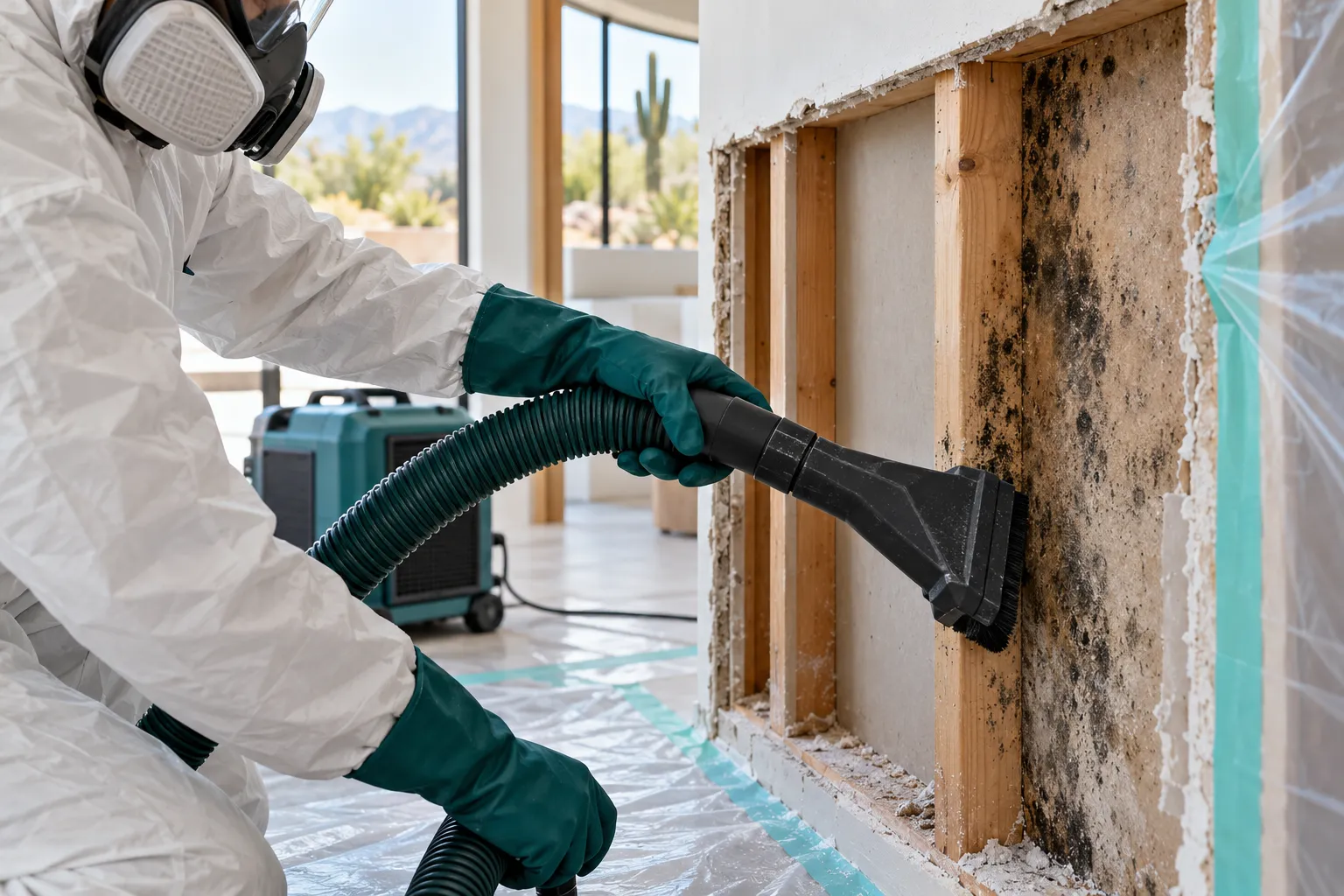
- Size. Under about 10 square feet, the EPA says (opens in a new tab) most people can handle the cleanup themselves. Larger areas usually call for a professional, with containment and proper removal.
- A smell with no visible growth. If a room smells musty and you cannot find the source, the growth is behind a surface. Guessing where to open a wall is how small jobs become big ones.
- Anyone sensitive in the house. The EPA notes mold can cause allergic reactions in some people. When someone at home is reacting, the timing stops being flexible.
Whatever you decide, fix the water first. Until the leak is stopped, cleaning is temporary.
§ 06 / 075 questions
Questions people ask
01How fast should I act after a leak?
The EPA window is 24 to 48 hours: water-damaged areas and items should be dried within that time to prevent mold growth. Drywall, insulation and carpet stay wet longest, so they set the clock.
02Is there a monsoon mold season in Scottsdale?
In practice, yes. Storm season runs June 15 to September 30, and roof and window leaks from those storms are one peak. The other is summer AC season, when condensate lines clog and overflow into closets and ceilings.
03How do I find a leak I cannot see?
Watch the water bill. The City of Scottsdale's WaterSmart program includes leak alerts for your account, and a bill that jumps without a change in use is worth a plumber's visit. Interior clues count too: a stain that grows after each storm, a warped floor, a paint bubble.
04Does a musty smell always mean mold?
Often, yes. A musty, earthy smell is usually the first sign, and it reads strongest in closed rooms and closets where air does not move. If the smell returns after cleaning, moisture is still feeding growth somewhere you have not found yet.
05When is it too big to handle myself?
Past about 10 square feet, or any time the growth is in the HVAC system, inside a wall cavity, or has already come back after cleaning. Sewage and flood water make it a professional job at any size.
§ 07 / 07Keep reading
- Mold remediation: how containment, removal and drying work on a larger job.
- Mold inspection and testing: finding the moisture source and confirming what is growing.
- Signs of mold in your home: the early signals and the clean-it-or-call-it line.
- Black mold facts: what the black mold name gets right and wrong.
- Does homeowners insurance cover mold?: how Arizona policies treat water and mold.
- Mold removal cost in Scottsdale: what drives the price of a job here.